Understand Battery Storage Before Buying It
Battery storage can completely change how your home uses electricity - but a bigger battery doesn’t automatically mean a better system.
Capacity is only part of the picture. How much electricity you use, when you use it, solar generation, charge and discharge power, tariff strategy, backup requirements and future plans can all influence what the right battery system should look like.
The aim isn’t simply to store as much energy as possible. It’s to have enough usable storage and enough power, in the right places at the right times.
How Battery Storage Works
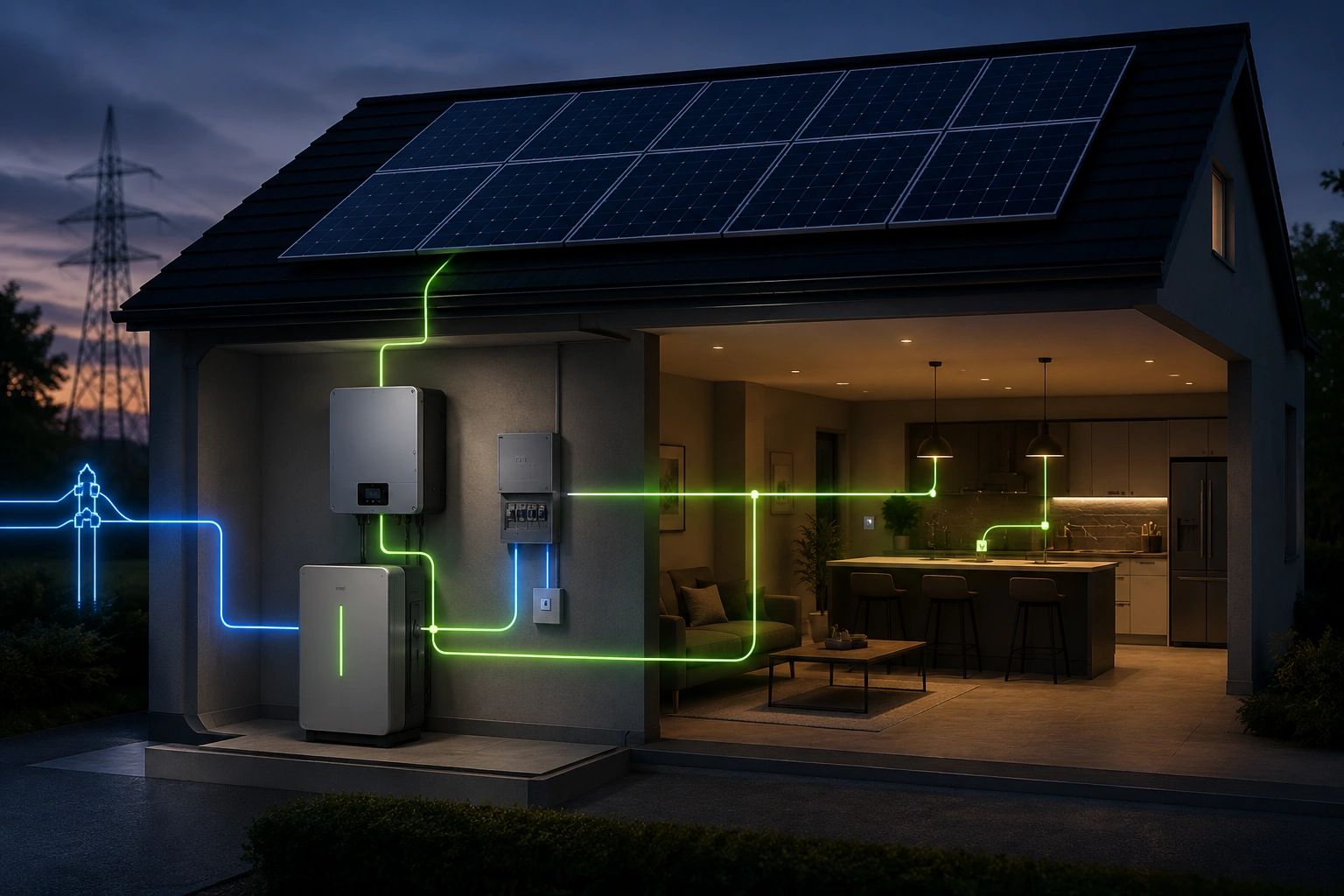
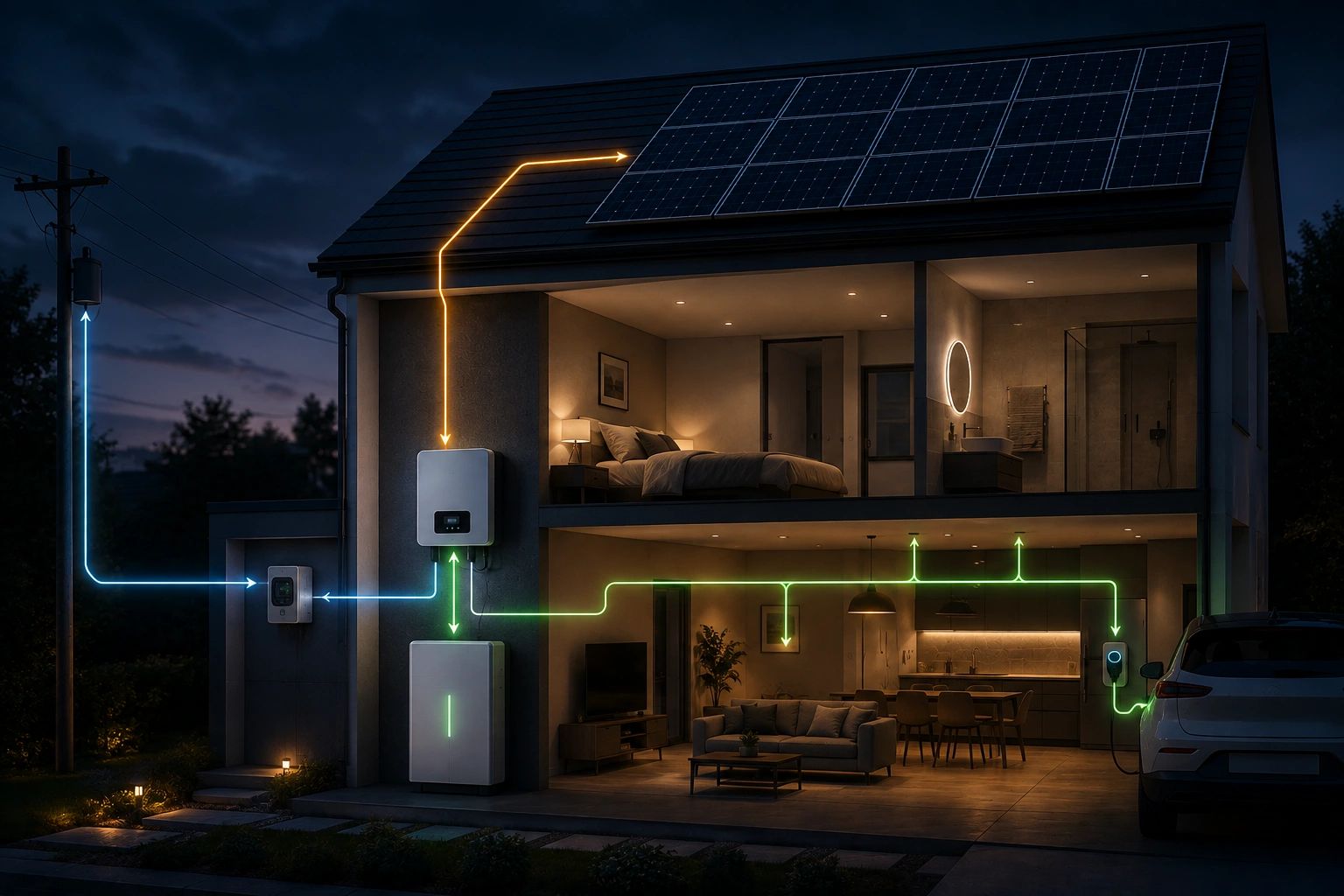
A home battery stores electricity so that it can be used later rather than immediately.
With solar PV, surplus generation that would otherwise be exported can be stored and used when the panels are producing less or the home’s demand increases.
Depending on the system and tariff, a battery may also be charged from the grid during cheaper periods and used later when electricity is more expensive.
How well that works depends on the battery capacity, charge and discharge capability, inverter, controls, tariff and the way your household actually uses electricity.
Why Consider Battery Storage?

USE MORE OF YOUR OWN SOLAR
MORE CONTROL OVER YOUR ENERGY
REDUCE PEAK-RATE ELECTRICITY
Store surplus solar generation during the day and use it later when your home needs it.
REDUCE PEAK-RATE ELECTRICITY
MORE CONTROL OVER YOUR ENERGY
REDUCE PEAK-RATE ELECTRICITY
With the right tariff and system setup, stored energy can reduce how much expensive electricity you need to buy during higher-rate periods.
MORE CONTROL OVER YOUR ENERGY
MORE CONTROL OVER YOUR ENERGY
MORE CONTROL OVER YOUR ENERGY
A battery gives you greater flexibility over when electricity is stored, imported and used.
BACKUP & ENERGY SECURITY
MORE CONTROL OVER YOUR ENERGY
MORE CONTROL OVER YOUR ENERGY
Some battery systems can provide backup power during a grid outage, but backup capability needs to be properly designed into the system.

Solar + Battery or Battery Only?
Do I Need Solar Panels To Have A Battery?
No. A battery can operate alongside solar PV, but battery-only systems can also make sense in some circumstances. For example, a battery may be charged during cheaper tariff periods and used later when electricity prices are higher.
Solar and battery storage together can increase the amount of your own generated electricity you use, while battery-only installations can provide a different type of energy-management strategy.
The right approach depends on what you want the system to achieve.
Could Battery Storage Work For You?
Not sure what size battery you actually need?
We can look at your electricity consumption, smart usage where available, existing or proposed solar system, tariffs, peak demand, future EV or heat-pump plans and what you're actually hoping the battery will achieve.
From there, I can help you understand whether battery storage makes sense and, importantly, what sort of battery system makes sense.