EV Charging That Works With Your Home
A home EV charger should do more than simply charge the car.
The right setup can work alongside your solar PV, battery storage, electricity tariff and household demand to help you charge at the most practical and cost-effective times.
HOW HOME EV CHARGING WORKS
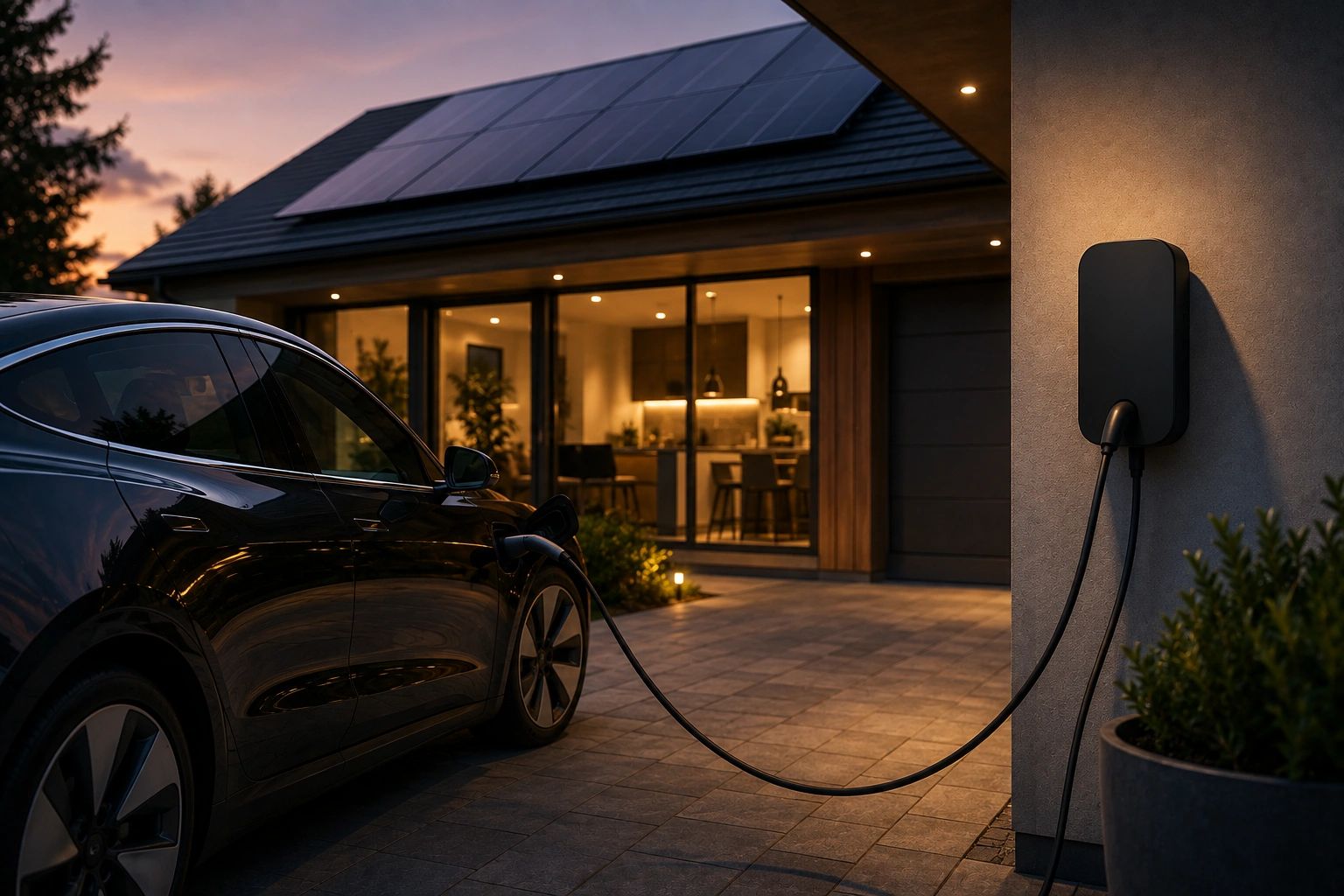
A dedicated home charger provides a faster, safer and more convenient way to charge an electric vehicle than relying on a standard socket.
Depending on the charger and system design, charging can be scheduled around off-peak tariffs, integrated with solar generation and managed alongside other large electrical loads in the home.
The important part is making sure the charger fits into the wider energy system, rather than treating it as a completely separate product.
WHY ADD EV CHARGING?

CHARGE AT HOME
USE CHEAPER ELECTRICITY
USE CHEAPER ELECTRICITY
Wake up with the car ready to go instead of relying on public charging.
USE CHEAPER ELECTRICITY
USE CHEAPER ELECTRICITY
USE CHEAPER ELECTRICITY
Smart scheduling can allow charging during lower-cost tariff periods.
MAKE USE OF YOUR SOLAR
USE CHEAPER ELECTRICITY
MAKE USE OF YOUR SOLAR
Compatible systems can direct surplus solar generation into the vehicle rather than exporting it all to the grid.

EV CHARGING + SOLAR + BATTERY
Think About The Whole System
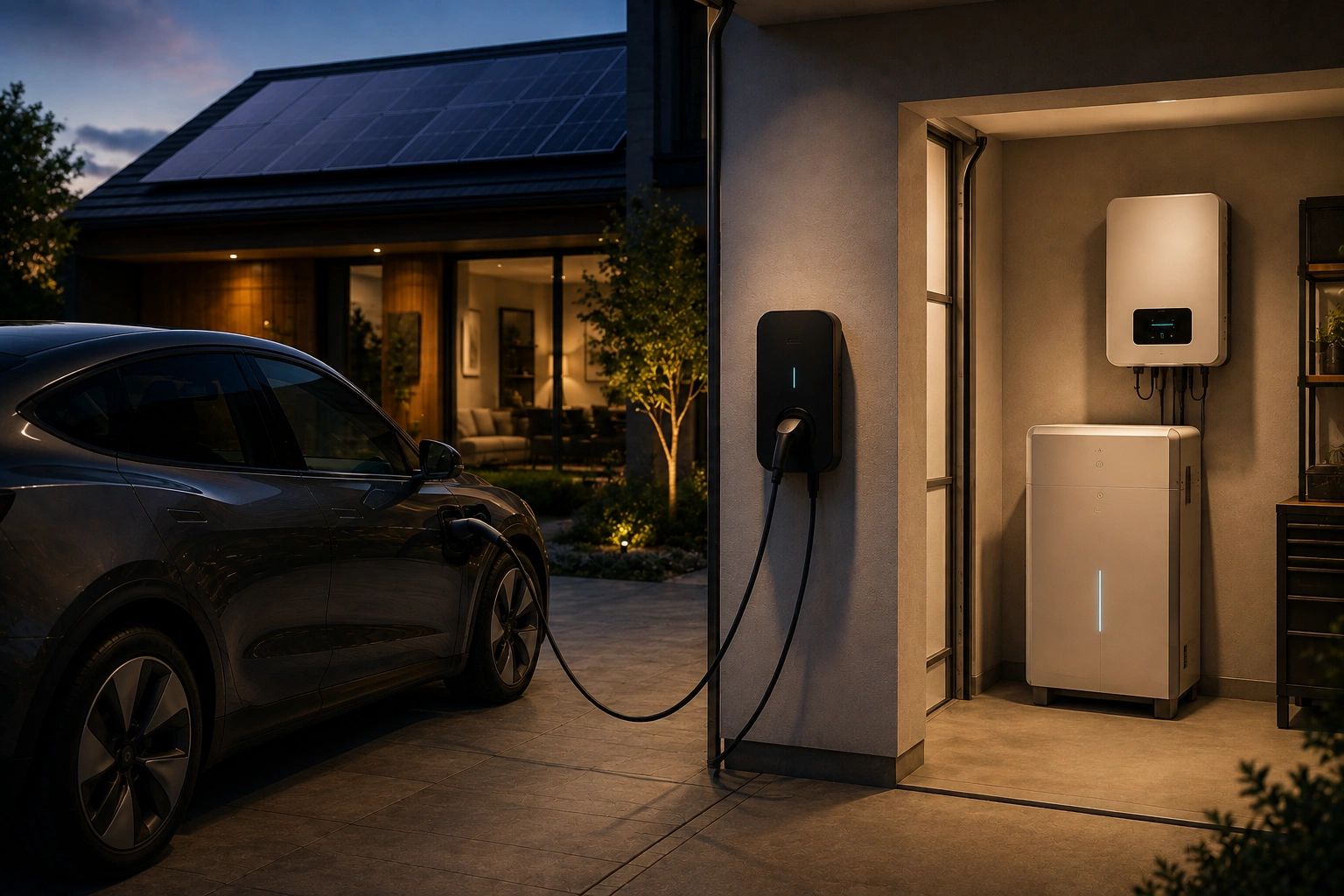
If you're already installing solar or battery storage, it makes sense to consider EV charging at the same time.
The charger, inverter, battery, incoming supply and other large electrical loads all need to work together properly. A well-planned system can consider:
Solar surplus charging
Battery interaction
Off-peak tariffs
Load management
Available electrical supply
Future vehicle requirements